AMAVI: website for a wedding planning firm
Website for a wedding planning firm in Bahia, Brazil, designed to convey the care of a high-touch service and turn a visit into a proposal request that already includes the wedding date and venue.
- My role
- UX/UI Designer
- Period
- 2026
- Client
- AMAVI Assessoria
Context and problem
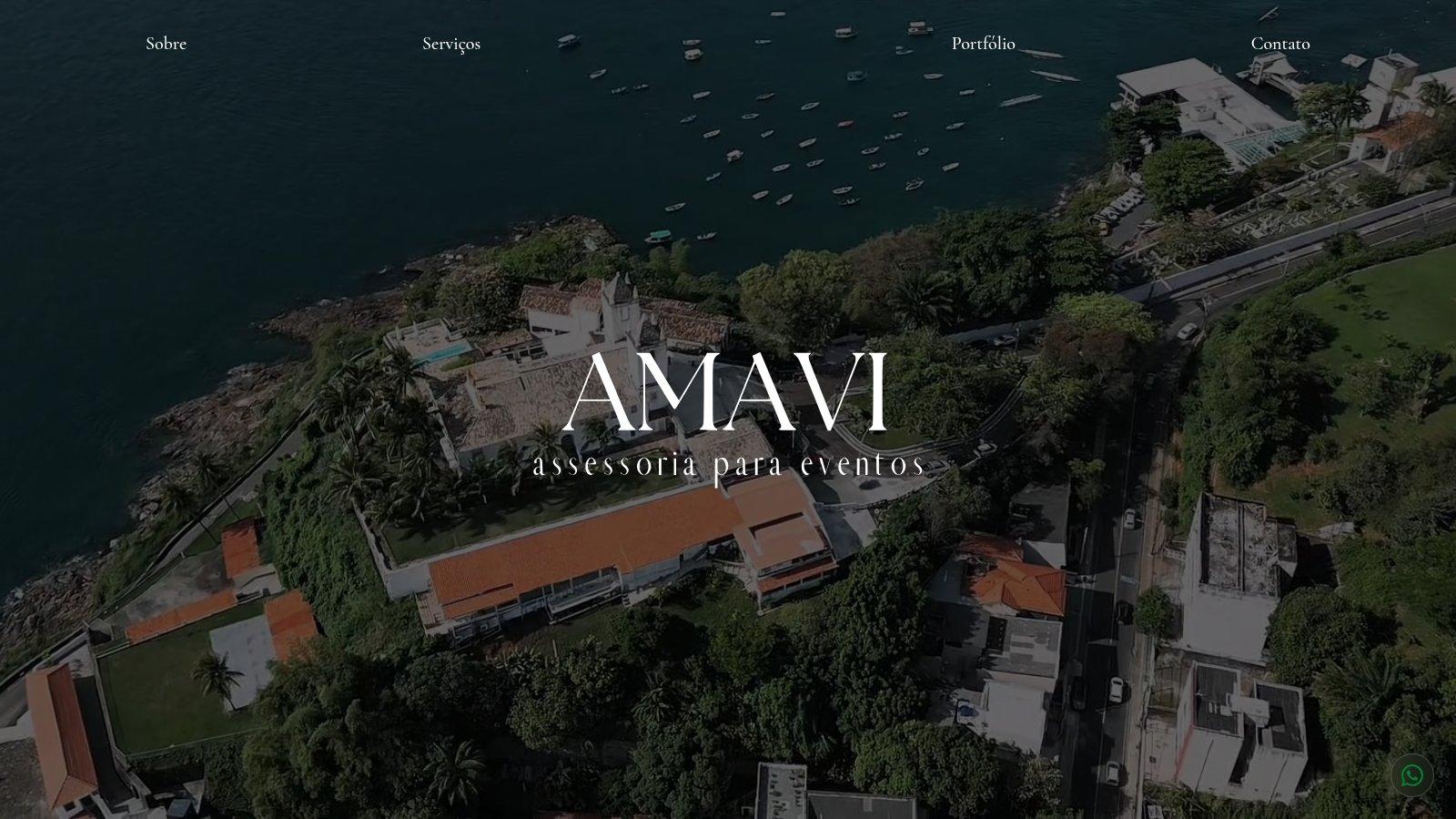
AMAVI is a wedding and social event planning firm in Bahia, Brazil, founded by Amanda Zaira and Victoria Gois. The name blends both founders' names, and the positioning is an "experience boutique": a few weddings at a time, with support from early planning to the big day. The focus is weddings in Salvador, Praia do Forte, the North Coast and Trancoso, including destination weddings.
Hiring a wedding planner is an expensive, emotional, high-trust decision. The couple is handing the most important day of their lives to someone else, and they usually research for months before signing. A website for this audience has to do two things:
- Build trust with people who don't know the firm yet: who the people are, how they work, what they have delivered.
- Turn interest into a qualified conversation, so the first contact already carries the information the firm needs to put together a proposal.
My role
I was responsible for the website design:
- page architecture and section order;
- 100% of the layout, on desktop and mobile;
- interface decisions: navigation, type hierarchy, galleries, the form and the calls to action.
I did not do the development.
Key decisions
Decision
Several pages or a single page?
Options considered
- A traditional site with separate pages: About, Services, Portfolio and Contact.
- A single page, with an anchor menu for each section.
Criteria
AMAVI's content is lean and reads like a story: who we are, how we work, who leads, what we have done and how to reach us. Splitting it into pages makes the couple click around to piece that story together, and raises the odds they leave before reaching the contact section.
Choice
A single page with anchor navigation (About, Services, Portfolio, Contact) and the logo in the middle of the menu. The section order leads visitors to the form at the end.
Trade-off
Fewer pages to rank in search and a longer page on mobile. In return, the experience is continuous and every scroll brings the couple closer to requesting a proposal.
Decision
How do you build trust in such a personal service?
Options considered
- Long institutional copy, with mission, values and a list of services.
- Visual proof and real people: a video up top, the founders' photos, a mood board and a wedding gallery.
Criteria
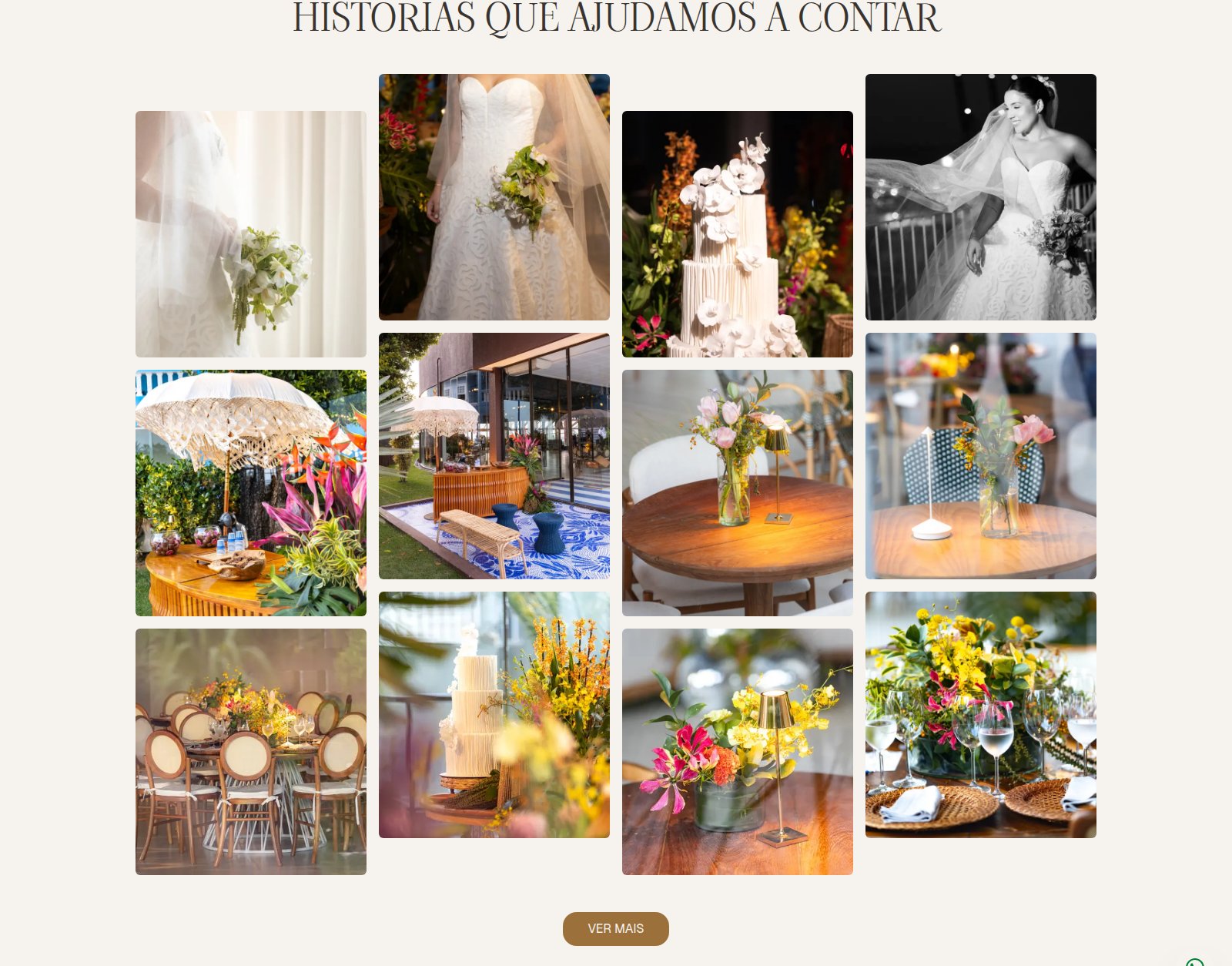
With a wedding planner, couples hire people, not a company. And the result of the work is mostly visual: decor, flowers, ambiance. Reading about "attention to detail" is less convincing than seeing the details.
Choice
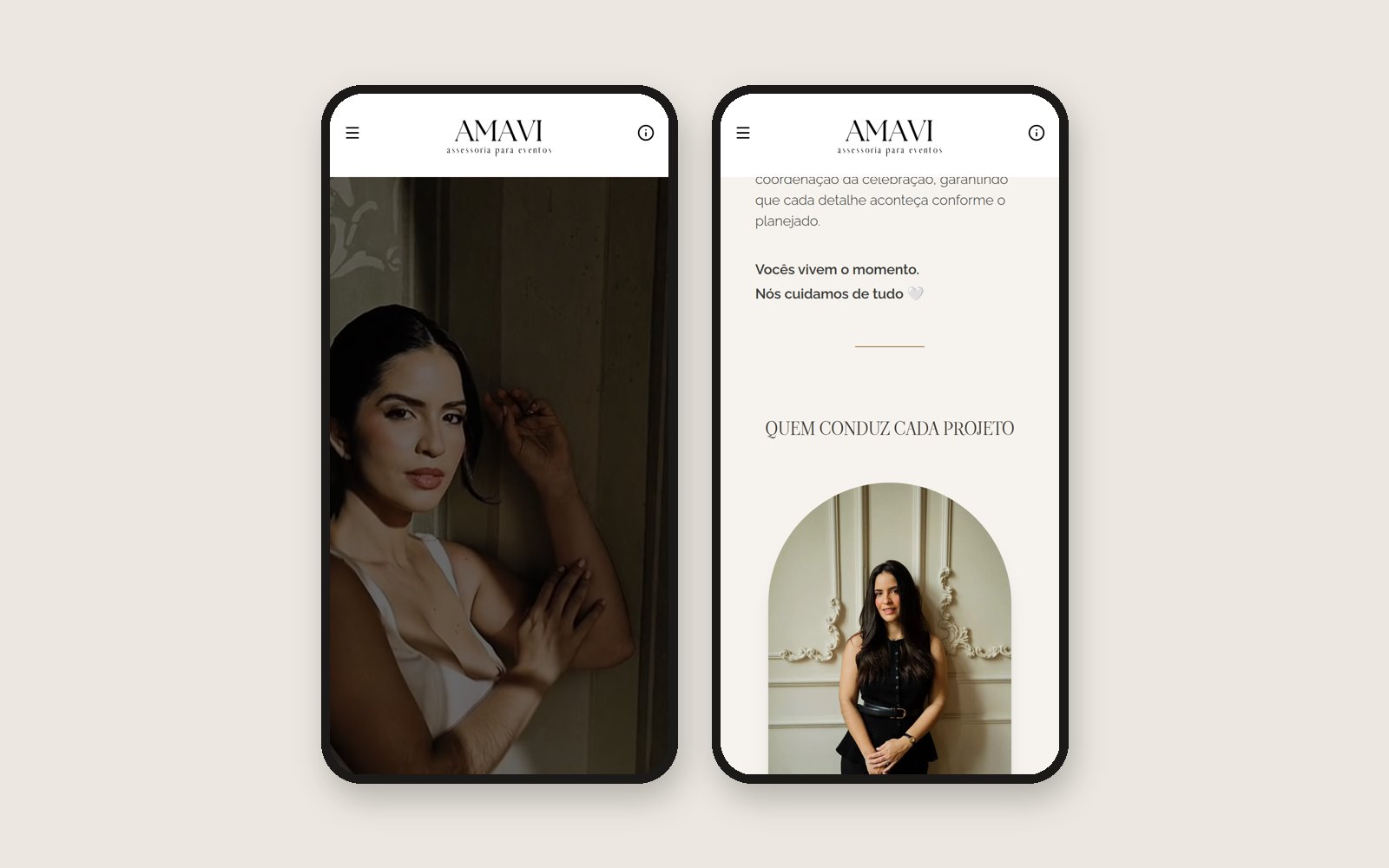
The site opens with a full-screen video and gives a whole section, "Who leads each project", to the two founders and each one's role. Then come the mood board and the "Stories we helped tell" gallery. The copy stays short and direct, as in "You live the moment. We take care of everything."
Trade-off
The site depends on high-quality photos and videos, which need updating as new weddings happen. Heavy media also calls for care with loading times, especially on mobile.
Decision
WhatsApp or a proposal form?
Options considered
- WhatsApp only, the channel most Brazilian couples already use to talk to vendors.
- A form only, to receive organized requests.
- Both, with different roles.
Criteria
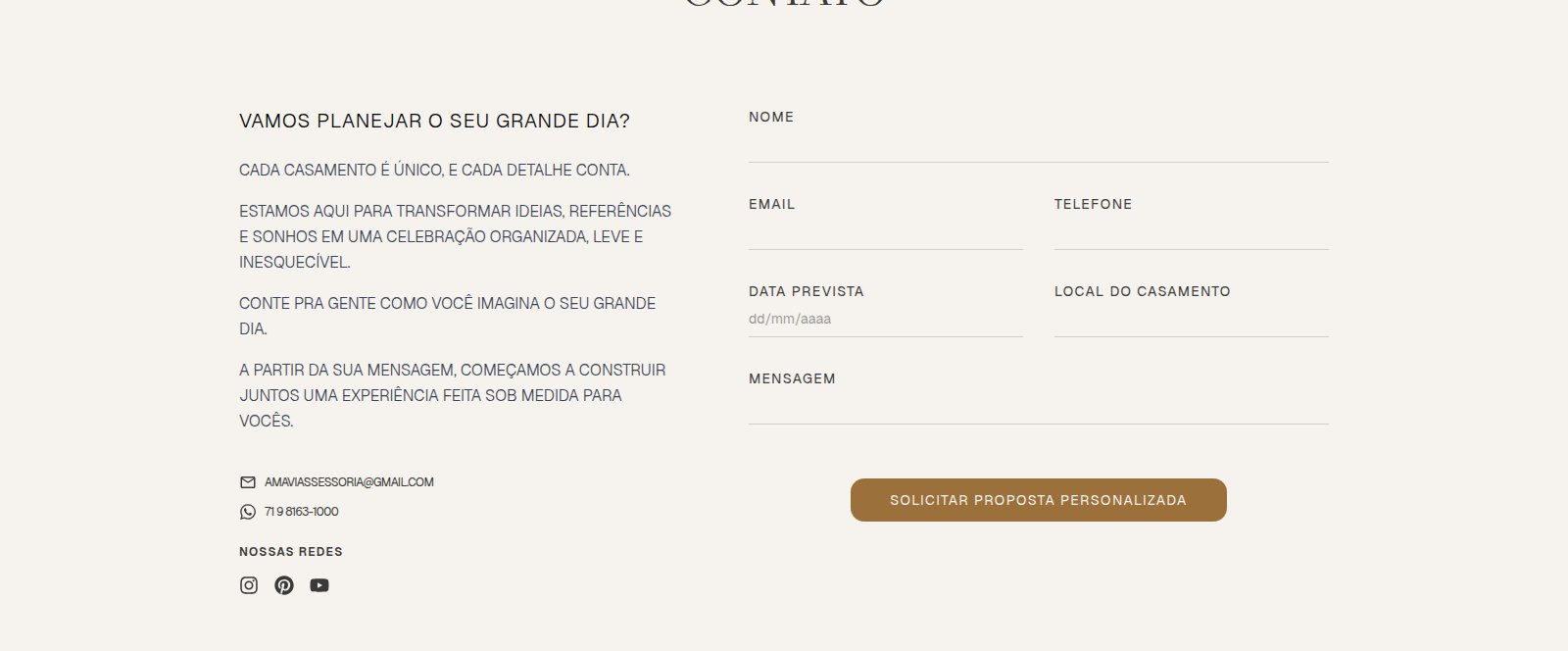
A planner needs a few basics to know whether they can take the job and to build a proposal: the expected date and the wedding venue. A WhatsApp chat that starts with "hi, how much?" takes several messages to get there. On the other hand, part of the audience wants a quick answer and won't fill anything in.
Choice
Both channels. The form, with a "Request a custom proposal" button, asks for name, email, phone, expected date, wedding venue and a message. WhatsApp stays always visible in a floating button for those who prefer to chat.
Trade-off
Two channels mean two places for the firm to keep track of. In return, people who fill in the form arrive qualified, and those who don't still have an immediate path.
Decision
How do you answer questions before the first contact?
Options considered
- Leave questions for the conversation with the firm.
- An FAQ section next to the contact form.
Criteria
Some questions come up in every conversation and can stall a couple before they ask for a proposal: how far in advance to hire a planner, whether the firm covers the Bahia coast, whether day-of coordination includes prior follow-up, and whether they recommend local vendors.
Choice
A Frequently asked questions section right after the form, with collapsible answers so the page doesn't get longer.
Trade-off
The firm has to keep the answers up to date. In return, couples clear the most common objections on their own and the first conversation starts further along.
Visual identity
The site follows the language of an elegant, light wedding: an off-white background, high-contrast serif type in the headings, gold accents and plenty of white space. The founders' photos use arch-shaped frames, and the main button uses the brand's earthy tone. On mobile, the menu collapses into an icon and the logo sits centered at the top.
Results
- Site live at amaviassessoria.com, adapted for desktop and mobile.
- There are no conversion metrics to share yet.
Learnings
- In a trust-based service, people come before the service. Showing who will run the wedding carries more weight than describing what the firm does.
- A good form asks what unlocks the proposal. Date and venue are just a few fields, but they save a string of messages at first contact.
- Don't force a single channel. Offering both a form and WhatsApp respects where each couple is, without losing qualified requests.